Post - Anti Termite

Have you observed any of the following lately?

Is your building or wood works are infested with termites?

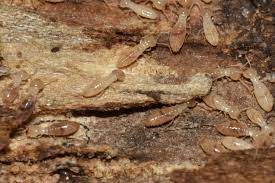
These are strong indicators that point towards only one thing – termite infestation. Termite infestation is difficult to detect as they work from the inside to the outside. Termites need cellulose to survive and your belongings like wood (your furniture, boxes or even wooden flooring, doors and window frames) and paper are majorly at risk. Termites actually live hundreds of feet below the ground (right near the foundation of your house or building). Termite infestation is not in numbers of tens or hundreds. There would be huge colonies in thousands that you have to deal with. They spread their wings in no time eating into every corner of your home or office. If neglected you might just not have anything left in a few months time.

Scope Of Our Anti Termite Treatment

Subterranean Termites “nest” in the soil and from there they can attack structures by building shelter tubes from the soil to the wood in structures. To control termites, it is almost always necessary to use pesticides. Pesticides used to control termites are called termiticides. Termiticides may be applied as liquids or baits. When applied as a liquid, the termiticide is injected into the soil or to wood members of a structure. When a bait system is used, the bait is placed in specially designed bait stations in the soil around the exterior perimeter of a structure. In this publication, we will discuss some of the options that homeowners’ can use to better understand how a structure is treated for termites.

Treatment of structures

A termite treatment may involve any of the following basic steps:

Mechanical Sanitation

Soil treatment

Wood treatment

Foundation treatment

Bait/monitoring system