
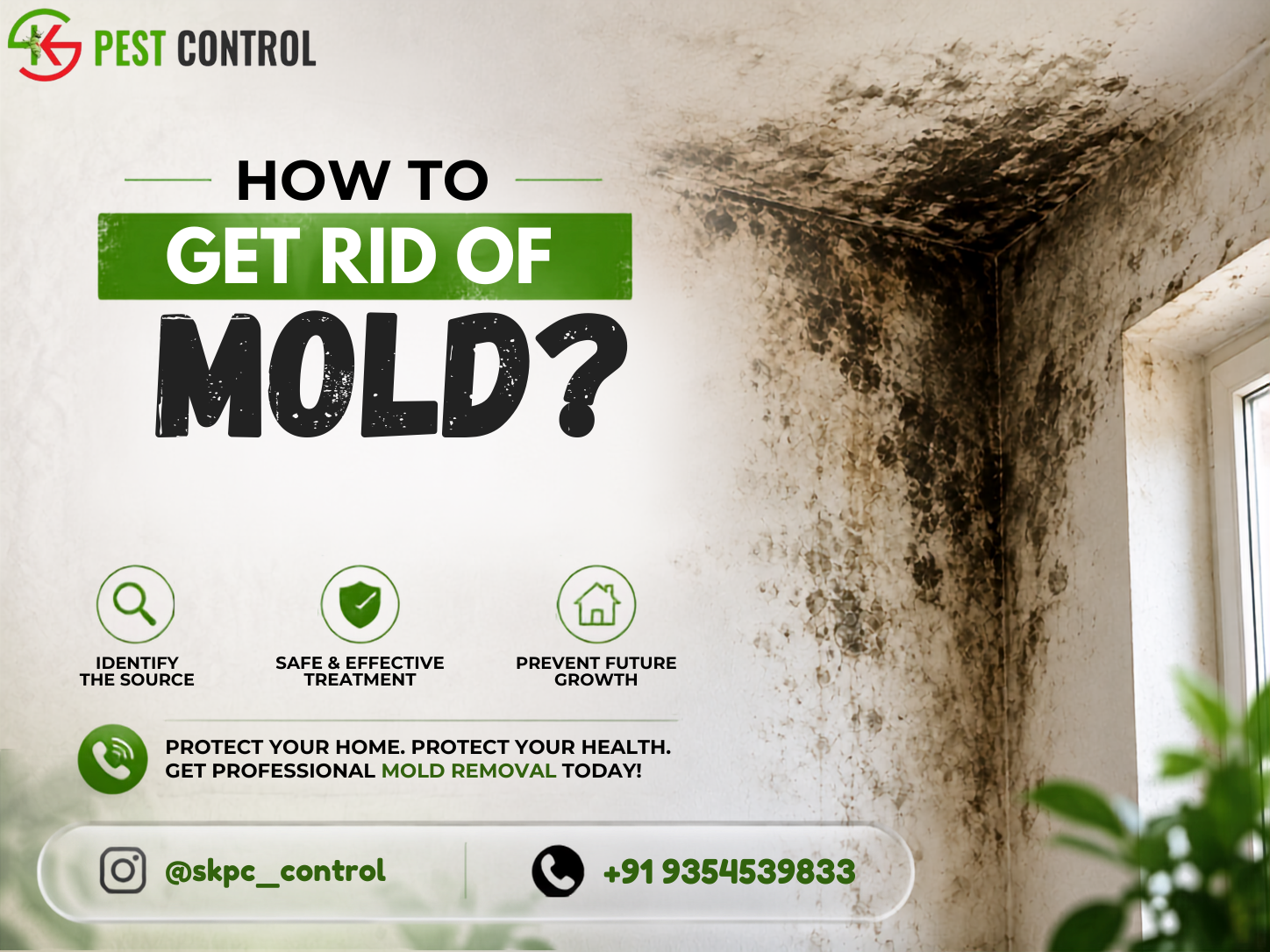
How to Get Rid of Mold (And Why It Keeps Coming Back)
If you’ve spotted black, green, or white fuzzy patches creeping across a bathroom wall, wardrobe, or ceiling corner, you’re dealing with mold — and it won’t go away on its own. Mold is a fungus that feeds on moisture, and once it takes hold, it spreads fast, damages surfaces, and can trigger allergies, coughing, and breathing trouble.
Small, fresh spots can often be wiped away at home. But if you’ve cleaned a patch before and it came back — or it’s spreading across more than a coin-sized area — that’s not a cleaning problem anymore, it’s a moisture problem, and this guide explains why household cleaning alone usually doesn’t solve it. It also covers something most guides skip entirely: why mold in Delhi NCR homes (Noida, Gurgaon, Ghaziabad, Faridabad) behaves differently from what generic guides describe, and how to tell when it’s time to call a professional. and If you’re considering professional treatment, understanding the mold removal cost guide for Delhi NCR can help you estimate what the treatment may involve.
What Causes Mold to Grow Indoors
Mold spores exist almost everywhere in the air. They only become a visible problem when three conditions line up:
- Moisture — leaking pipes, seepage, condensation, or high humidity (mold usually starts once indoor humidity crosses roughly 60%)
- A food source — drywall, wood, paint, grout, fabric, dust, and even the glue behind wallpaper
- Poor airflow — closed, dark rooms where damp surfaces never fully dry
That combination is why mold shows up first in bathrooms, kitchen backsplashes, basements, ground-floor flats, window sills, wardrobes pushed against outer walls, and behind furniture that blocks airflow.
Signs You Actually Have Mold (Not Just a Stain)
- Fuzzy or slimy texture, not just a flat discoloration
- A persistent musty, earthy smell in a room even after cleaning
- Patches that return in the same spot within days of wiping
- Peeling paint or a soft, bubbling wall surface
- Family members with unexplained sneezing, congestion, or skin irritation that eases when they leave the house

Quick Fixes — For Very Small, Fresh Spots Only
If you’ve caught a coin-sized patch on a tile or glass surface within the last day or two, a quick wipe with undiluted white vinegar or 3% hydrogen peroxide, left on for 10 minutes then scrubbed and dried, can handle it. Wear a mask and gloves, and never mix bleach with ammonia or any other cleaner — the combination releases toxic gas.
Even so, mold is a health hazard, not just a cleaning nuisance — disturbing it releases spores into the air that can trigger allergies and breathing issues, so even for a small, fresh spot, the safer route is to have it checked by a professional rather than assume it’s fully handled. A quick wipe may clear the color, but it doesn’t confirm the mold hasn’t already spread into the material underneath.
That’s genuinely as far as safe DIY should go. Here’s why: a visible patch is usually just the part of the mold colony you can see. Wiping the surface color away removes the stain, not the root structure growing into paint, plaster, grout, or wood — which is exactly why so many people find the same patch back within a week, often larger than before. On walls, wardrobes, and any patch bigger than a coin, DIY cleaning also risks releasing spores into the air as you scrub, spreading the problem to other parts of the room instead of containing it.
Here’s the difference in plain terms:
| Small, fresh spot (DIY-safe) | Anything bigger / returning / hidden | |
|---|---|---|
| What it looks like | Coin-sized, on a hard surface, spotted within 1–2 days | Larger patches, wall/ceiling stains, black mold, or a musty smell with no visible source |
| Root cause addressed? | No — only the visible surface | Yes — professionals trace the actual moisture source |
| Spore exposure risk | Present even for small patches | Higher, and needs controlled containment |
| Chance it returns | Fairly high if the surface isn’t dried properly | Low, when the moisture source is fixed |
| Recommended action | Wipe with vinegar/hydrogen peroxide, then book an inspection to confirm | Book a professional mold remediation service |
Why “Just Clean It Yourself” Usually Doesn’t Solve Mold
Removing mold properly means finding and fixing the moisture source feeding it — a leak inside a wall, a blocked exhaust fan, a clogged AC drain line, or an incorrect slope in a bathroom or balcony letting water pool instead of drain. Household cleaning products can lift surface staining, but they can’t identify a hidden leak inside a wall cavity, and they don’t stop regrowth if the moisture problem underneath is still there. That’s the gap between “the patch looks gone” and “the mold problem is actually solved” — and it’s the single biggest reason mold keeps coming back for people who’ve cleaned it two or three times already.
Why Mold Spreads Faster in Delhi NCR Homes (and Why Generic Guides Miss This)
Most mold guides are written for humid coastal or Western climates. Delhi NCR has its own set of triggers that make mold both more common and more stubborn:
- Extended monsoon humidity: indoor humidity in the region regularly climbs above 70–80% between July and September, well past the roughly 60% threshold where mold accelerates — but unlike coastal cities, that humidity spike is compressed into a shorter, more intense window, so mold appears faster and more visibly once it starts.
- New-construction moisture: apartments in fast-growing areas like Gurgaon, Noida, and Greater Noida are frequently handed over on tight construction timelines, meaning walls and slabs may not have had adequate curing and drying time before residents move in — this is why some brand-new flats show wall fungus within the first year.
- Concealed plumbing: modern flats run plumbing lines inside walls and floors rather than externally. A minor joint leak stays invisible for months, quietly feeding a mold colony until a patch finally appears on the painted surface.
- Ground-floor and basement flats: high groundwater tables in parts of NCR mean ground-floor units and basements see mold complaints earlier in the season and more severely than upper floors.
- Sealed, low-airflow apartment design: closely built high-rises block direct sunlight to many units, and windows often stay shut against rain, dust, or AQI concerns — removing the two things (sunlight and airflow) that naturally suppress indoor mold.
Practical takeaway: if you live in a ground-floor flat, a unit that gets little direct sun, or a relatively new building in NCR, treat July–September as a mold-prevention season, not just a mold-cleanup season — start dehumidifying and checking exhaust fans before the first patch appears, not after.
When to Call a Professional Mold Remediation Service
Call a professional rather than reaching for another bottle of vinegar when:
- The affected area is larger than a coin or two — anything spread across a section of wall, ceiling, or wardrobe
- Mold has returned in the same spot even once after you’ve already cleaned it
- There’s a musty smell with no visible mold, which usually means it’s growing inside a wall cavity, false ceiling, or under flooring
- Someone in the house has ongoing sneezing, coughing, or skin irritation that eases when they’re away from home
- You’re dealing with black mold covering a continuous patch — this needs proper identification (not every dark patch is toxic Stachybotrys, but it should be professionally checked, not guessed at)
A proper mold remediation service starts with finding the actual moisture source — not just cleaning what’s visible — then safely removes affected material where needed and treats the area to prevent regrowth. That’s the part a bottle of vinegar can’t do, and it’s why patches that “keep coming back” almost always need a proper inspection rather than a fourth round of scrubbing. If you’re in Delhi, you can also read more on mold and fungus treatment options here.
7 ways for Preventing Mold From Coming Back
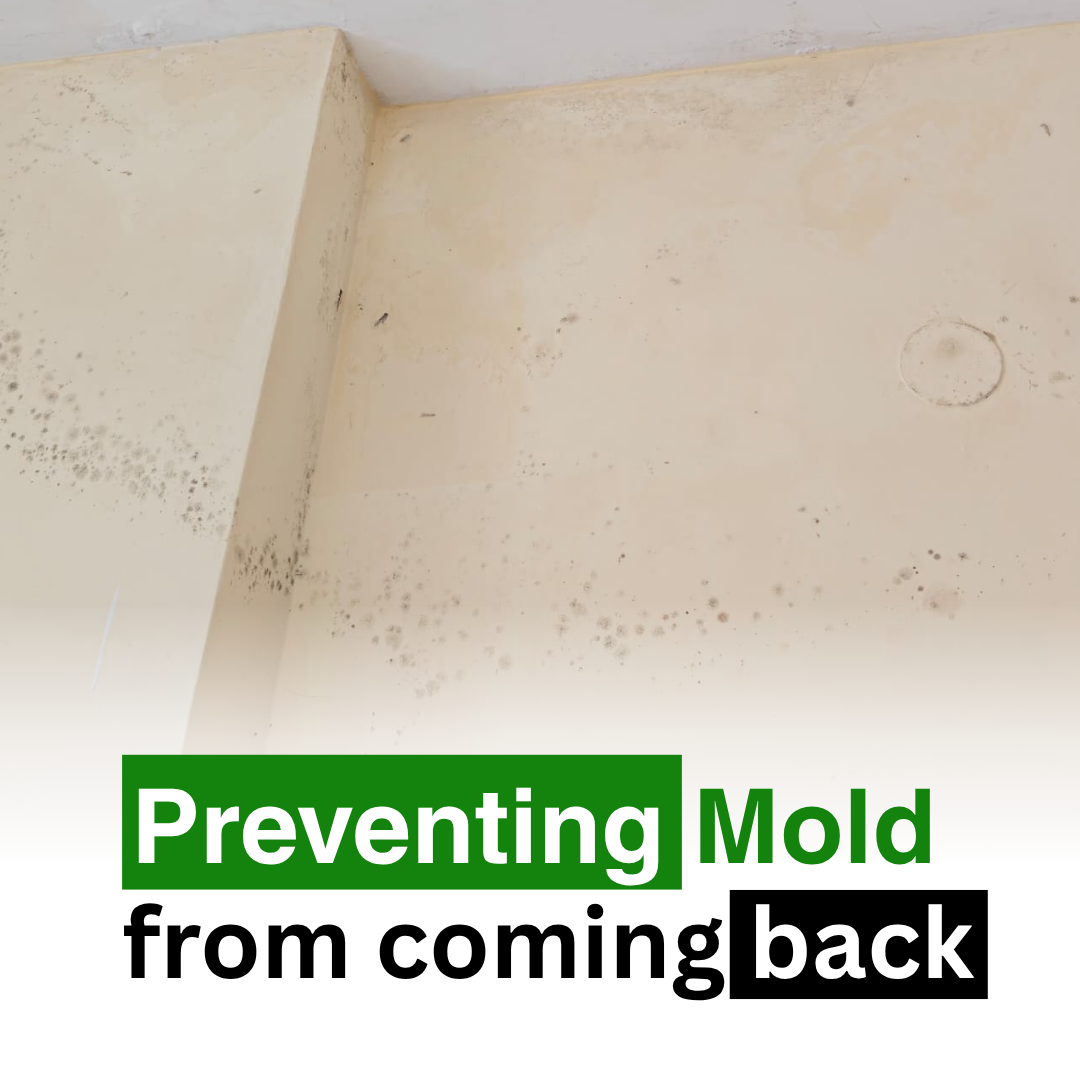
- Keep indoor humidity under 50% where possible — a small hygrometer costs very little and takes the guesswork out
- Run bathroom and kitchen exhaust fans during and for 15–20 minutes after use
- Get your AC’s drain line checked before monsoon — a clogged line is a common hidden moisture source
- Leave 2–3 inches of gap between wardrobes/furniture and outer walls to allow airflow
- Don’t store damp clothes, towels, or shoes inside closed cupboards
- Open windows and curtains during the driest, sunniest hours of the day, even briefly
- Use moisture-resistant or anti-fungal paint in bathrooms, kitchens, and ground-floor rooms during repainting
Frequently Asked Questions
- How to remove mold from wall ? For a small, fresh patch, put on a mask and gloves, then apply undiluted white vinegar or 3% hydrogen peroxide directly onto the mold, let it sit for 10 minutes, then scrub with a stiff brush and dry the area completely — moisture left behind lets mold return within days. Avoid mixing bleach with any other cleaner, as this releases toxic fumes. For patches larger than a coin, mold that has returned after cleaning, or stains spreading across the wall, surface cleaning won’t remove the root growing inside the plaster or paint — this needs professional mold remediation to trace the moisture source and treat the wall properly. Siya Killer Pest Control offers professional mold remediation across Delhi NCR — call 9354539833 to book an inspection.
- Is it safe to remove mold myself, even a small patch? You can wipe away a very small, fresh patch with vinegar or hydrogen peroxide, but mold is a genuine health hazard — scrubbing it releases spores into the air — so it’s advisable to get even small patches checked by a professional rather than assume a quick clean has fully resolved it.
Does vinegar really kill mold, or just bleach the color? Vinegar is mildly acidic and does kill many common household mold species at the root, not just the surface color — which is why it’s often recommended over bleach for porous surfaces, where bleach only bleaches the visible color and doesn’t reach mold growing inside the material.
Can I just paint over mold instead of removing it? No. Paint traps moisture and mold underneath, and it will bubble through or reappear within weeks. Always clean and fully dry the surface first.
Is a musty smell with no visible mold still a problem? Yes — a persistent musty smell usually means mold is growing somewhere hidden, like inside a wall cavity or under flooring, and is a common reason to get a professional inspection rather than keep cleaning surfaces.
How long does it take for mold to come back after cleaning? If the moisture source isn’t fixed, visible regrowth can appear within a week, especially during monsoon months in humid regions like Delhi NCR.
Is mold more dangerous for children and elderly family members? Yes, prolonged exposure to mold is more likely to affect children, elderly people, and anyone with asthma or existing respiratory conditions, so faster action matters more in homes with vulnerable family members.
Struggling With Mold That Keeps Coming Back?
Cleaning it yourself only goes so far when the real problem is a hidden leak or trapped humidity. Siya Killer Pest Control offers professional mold remediation across Delhi NCR — Noida, Gurgaon, Greater Noida, Ghaziabad, and Faridabad — for homes, offices, and housing societies. We identify the actual moisture source, safely remove affected material, and treat the area to stop regrowth, using child- and pet-safe treatments.
📞 Call 9354539833 to book an inspection.