
Termite Piping System in Noida: Future-Proofing Your Property
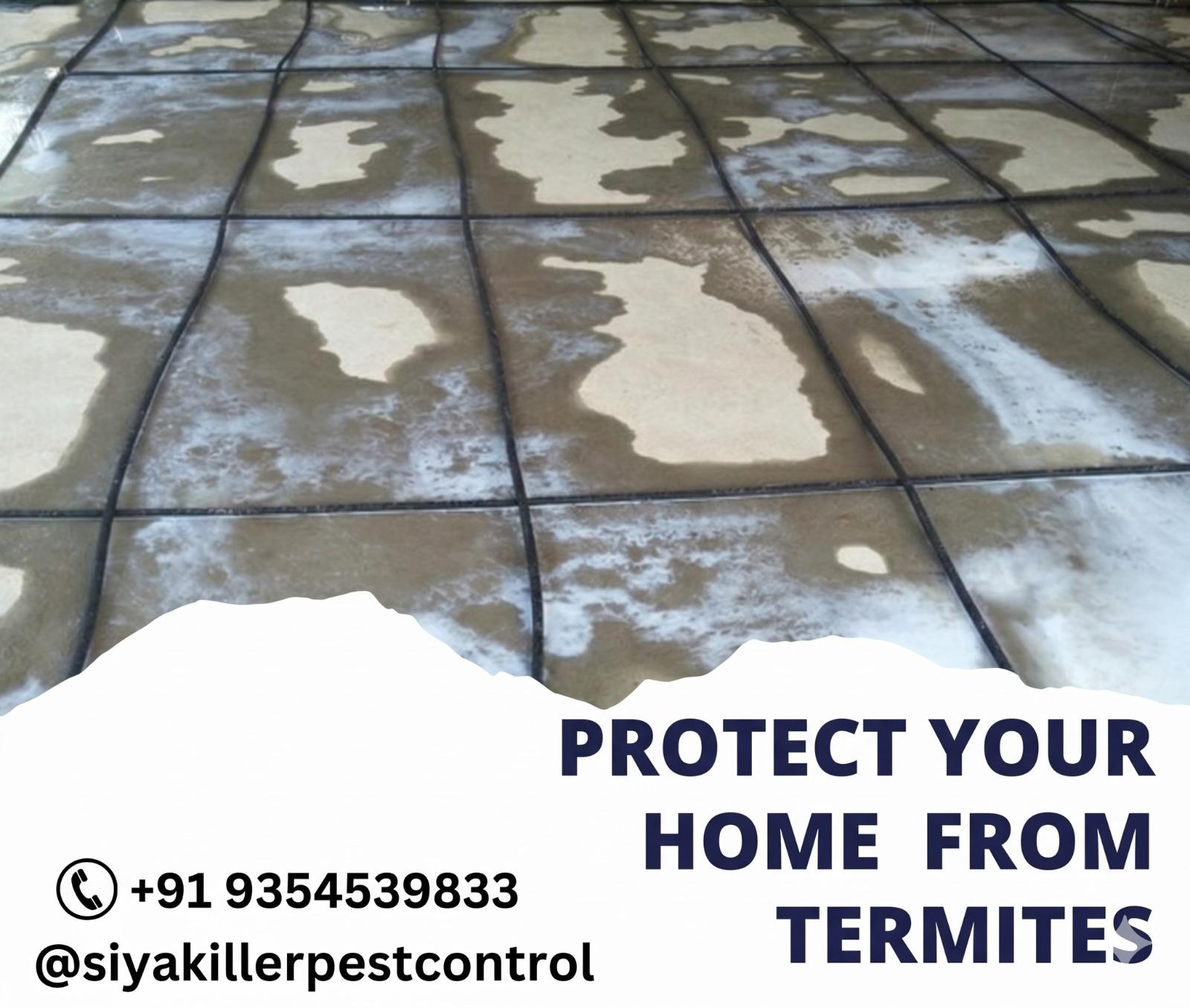
Noida has established itself as one of the fastest-growing and most meticulously planned real estate destinations in the National Capital Region (NCR). From the ultra-luxury villas in Sector 150 to the sprawling commercial IT parks along the Noida-Greater Noida Expressway, the architectural landscape is evolving rapidly. Homeowners and commercial developers are investing heavily in premium interiors, including imported wooden flooring, bespoke modular kitchens, intricate wooden panelling, and expensive imported furniture. However, beneath the concrete and luxury lies a relentless, silent threat that thrives in the specific soil and climatic conditions of the region: subterranean termites.
For decades, the standard approach to termite control in India was reactive. Property owners would wait until a termite swarm occurred or until visible damage appeared on their expensive woodwork. The solution was the traditional “drill-fill-seal” method, which involved drilling unsightly holes into pristine Italian marble or wooden floors, injecting harsh chemicals, and patching the holes. Today, modern architecture demands a modern, proactive solution.
Integrating a termite piping system in Noida during the pre-construction or renovation phase is the most advanced, permanent, and aesthetically pleasing method to protect your property from white ants. This comprehensive, 2700+ word guide delves deep into everything you need to know about termite reticulation systems, the science behind the technology, the installation process, the comparative ROI, and why it is an absolute necessity for modern properties in Noida.
Understanding the Enemy: Why Noida is a Termite Hotspot ?

To appreciate the necessity of a termite piping system in Noida, one must first understand the biology of subterranean termites and why the geography of the NCR is particularly conducive to their colonies.
The Geography and Soil Conditions
Noida (New Okhla Industrial Development Authority) is situated in the Yamuna River basin. The soil here is predominantly alluvial—rich, loamy, and highly capable of retaining moisture. While this is excellent for the lush green belts and landscaped gardens that define Noida’s sectors, it creates the perfect breeding ground for subterranean termites. These insects require a constant source of moisture to survive, and the damp soil beneath building foundations serves as an ideal habitat for colonies that can number in the millions.
The Biology of Subterranean Termites
Unlike drywood termites that live directly inside the wood they consume, subterranean termites build massive underground colonies. A single colony is governed by a queen that can live for over a decade and lay thousands of eggs daily. The colony is sustained by “worker” termites. These blind, relentless foragers travel outward from the colony in search of cellulose—the primary structural component of wood, paper, and drywall.
Workers construct “mud tubes” to protect themselves from open air and sunlight as they travel from the soil to your home’s wooden structures. They are incredibly persistent and can squeeze through cracks in concrete foundations as thin as 1/32 of an inch. Expansion joints, plumbing penetrations, and micro-fractures in the slab are all viable entry points.
The Financial Devastation
Termites are often referred to as “silent destroyers” because they consume wood from the inside out. A wooden door frame or a modular kitchen cabinet may look perfectly intact on the surface, while the interior is completely hollowed out. By the time the damage becomes visible—often presenting as blistered paint, hollow-sounding wood, or discarded wings from a swarm—the structural integrity is already compromised. In luxury homes in Noida, a severe termite infestation can cause lakhs of rupees in damage in a matter of months, completely ruining expensive interior investments.
What is a Termite Piping System?
Often referred to as a “Pipe Reticulation System” or an “Anti-Termite Tubing System,” a termite piping system is a revolutionary, replenishable chemical delivery network installed beneath a building’s foundation or flooring before the final construction phases are completed.
The core philosophy behind this system is to create a continuous, unbroken chemical barrier between the soil and the building structure, preventing subterranean termites from ever reaching the concrete slab. More importantly, it is designed to be easily maintained and recharged over the lifespan of the building without ever requiring technicians to enter the living spaces or drill into the floors.
Core Components of the System
-
Porous Reticulation Pipes: The heart of the system is a network of specialized, flexible pipes, typically 16mm to 20mm in diameter, made from highly durable LLDPE (Linear Low-Density Polyethylene) or specialized PVC. These are not standard plumbing pipes; they are engineered with micro-drip slits or pressure-compensating emitters spaced at precise intervals (usually every 30 cm). These emitters are designed to release liquid termiticide slowly and uniformly into the surrounding soil.
-
Junction Boxes (Access Points): The underground pipe network is routed to the exterior perimeter of the building and connected to discreet, secure junction boxes mounted on the outer walls. These boxes contain the inlet valves where technicians will later connect their high-pressure pumps to inject the chemical.
-
Fittings, Connectors, and End Caps: High-quality brass or industrial-grade plastic T-joints, elbow joints, and end caps are used to construct the grid. The integrity of these joints is critical to ensure the chemical does not leak prematurely and reaches the furthest points of the network.
-
The Chemical Termiticide: The system relies on advanced, non-repellent liquid termiticides (such as Imidacloprid, Fipronil, or Bifenthrin) that are approved by the World Health Organization (WHO) and the Central Insecticides Board (CIB) of India.
The Science of Reticulation: How the System Works
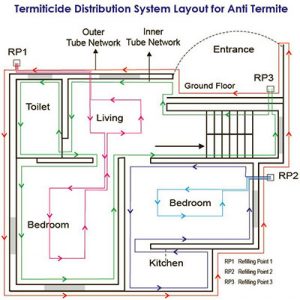
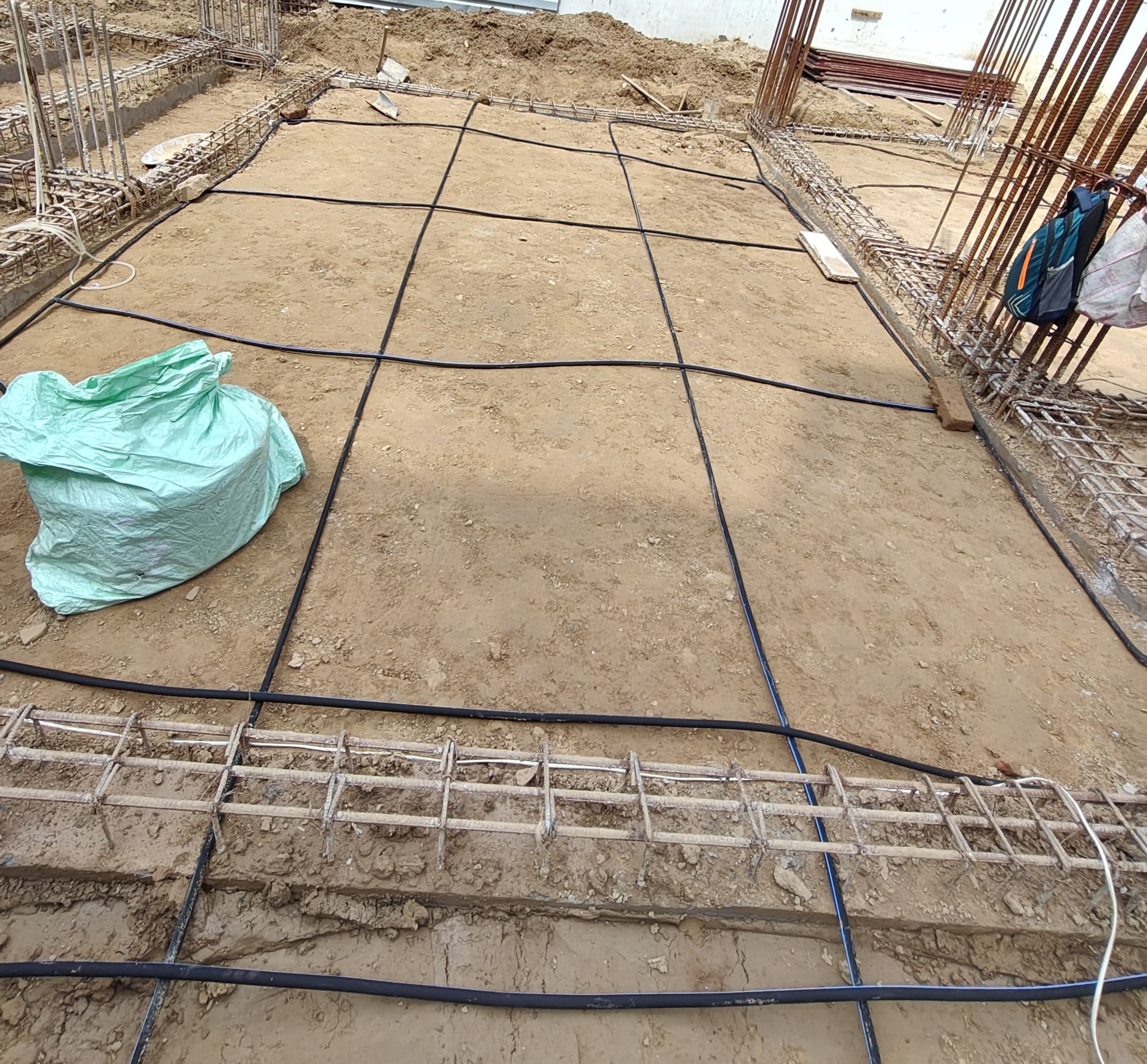
When the construction of the building reaches the plinth level (just before the floor concrete is poured), the piping network is laid down in a calculated grid pattern. The pipes are placed along the inner perimeter of the foundation walls, in a grid across the floor area, and heavily concentrated around critical vulnerability points like bathroom drainage pipes, electrical conduits, and kitchen plumbing shafts.
Once the flooring is completed and the house is ready, the system undergoes its first “charge.” A trained pest control technician opens the exterior junction box, connects an industrial pump, and injects a precisely calculated volume of termiticide mixed with water into the network.
As the pump pressurizes the system, the chemical travels through the LLDPE pipes. The pressure-compensating emitters ensure that the liquid is pushed out evenly across the entire length of the pipe, rather than just pooling near the injection point. The chemical seeps into the soil and binds with the earth, creating an invisible, toxic shield beneath the house.
Because liquid termiticides naturally degrade over time due to soil moisture, microbial action, and pH levels, the chemical barrier usually lasts between 3 to 5 years. When it is time to renew the barrier, the process is incredibly simple. There is no drilling, no shifting of furniture, and no messy sprays inside the house. The technician simply returns to the exterior junction box, reconnects the pump, and injects a fresh batch of chemical, instantly restoring the protective shield for another few years.
Traditional Treatment vs. Termite Piping Systems in Noida
To truly understand why developers and homeowners in Noida are aggressively adopting this technology, we must conduct a deep-dive comparison between the traditional post-construction treatment (the Drill-Fill-Seal method) and the modern Termite Piping System.
1. Aesthetic Preservation
-
Traditional Method: If termites invade an existing home, pest control technicians must drill 12mm holes every 1 foot along the junction of the floor and the walls. For a 3000 sq. ft. villa, this means drilling hundreds of holes through imported marble, granite, or wooden flooring. After injecting the chemical, the holes are sealed with white cement or wax, leaving permanent, ugly scars on your expensive floors.
-
Piping System: The entire network is completely subterranean. The only visible components are small, neat junction boxes located on the exterior of the house, often hidden behind landscaping. Your interior aesthetics remain 100% untouched for the lifetime of the property.
2. Efficacy and Coverage of the Chemical Barrier
-
Traditional Method: Drilling holes every 12 inches creates localized “pools” of chemicals beneath the floor. Depending on the soil compaction and debris beneath the slab, the chemical may not spread evenly between the holes. This leaves microscopic gaps in the barrier—gaps that worker termites will eventually find and exploit.
-
Piping System: The porous pipes provide a continuous, 360-degree distribution of the chemical. The emitters ensure a uniform saturation of the soil, creating a flawless, gap-free barrier that termites cannot penetrate.
3. Disruption to Daily Life
-
Traditional Method: Re-treating a home requires a massive logistical effort. You must empty cabinets, move heavy furniture away from the walls, cover your belongings to protect them from drilling dust, and endure the strong odor of chemicals inside your living spaces for days. It is a highly disruptive and stressful process.
-
Piping System: Re-charging the system is completely non-intrusive. The technician arrives, opens the exterior box, pumps the chemical, and leaves. You do not even need to be home. Your children and pets remain inside, completely undisturbed, and there is absolutely no chemical odor inside the house.
4. Health and Environmental Safety
-
Traditional Method: Pumping hundreds of liters of pesticide inside the house carries inherent risks of indoor air pollution. Lingering fumes can cause discomfort, and accidental spills during the drilling process can be hazardous to pets and small children.
-
Piping System: The termiticide is delivered exclusively underground, beneath a thick concrete slab. There is zero exposure to the inhabitants of the house, making it the safest possible method for residential termite management.
5. Long-Term Financial ROI
-
Traditional Method: While the initial cost of a post-construction drill treatment might seem lower, the long-term costs are astronomical. You face the recurring cost of repairing termite-damaged wood, the cost of replacing ruined floor tiles, and the labor costs of repeated drill treatments every few years.
-
Piping System: The upfront cost of installing the piping during construction is slightly higher, but the maintenance cost is negligible. You only pay for the cost of the chemical during the refill process every 3-5 years. The system drastically increases the resale value of the property and acts as a cheap insurance policy for your multi-lakh interior investments.
Step-by-Step Installation Process: Engineering the Perfect Barrier
Installing a termite piping system in Noida requires precise engineering and a deep understanding of construction phases. It cannot be done as an afterthought; it must be integrated seamlessly into the building process. Here is how our expert technicians execute the installation:
Phase 1: Site Inspection and Network Architecture
Before the flooring phase begins, our technical team visits the construction site. We analyze the architectural blueprints to identify load-bearing walls, expansion joints, plinth beams, and critical utility penetrations. Based on this, we design a custom piping grid that ensures maximum chemical coverage while avoiding interference with future plumbing or electrical work.
Phase 2: Surface Preparation
The soil or sand bed within the plinth is leveled and compacted. It is crucial that the surface is clear of large sharp stones or construction debris (like discarded wood or cardboard), as these not only attract termites but can also puncture the pipes during the concrete pouring phase.
Phase 3: Laying the Reticulation Network
The 16mm porous pipes are carefully rolled out according to the blueprint. The pipes are laid alongside the inner walls, forming a continuous loop. For large rooms, an additional grid pattern is laid across the center of the floor. The pipes are strategically wrapped around major plumbing shafts, as termites frequently use the moisture around drainage pipes as a highway into the house.
Phase 4: Securing and Clamping
To ensure the pipes do not float up or shift out of position when the heavy concrete slab is poured, they are securely pinned to the ground using heavy-duty hooks or U-clamps at regular intervals of 1 to 2 feet.
Phase 5: Routing to the Exterior Junctions
The ends of the pipe network are routed through the exterior walls using protective PVC sleeves to prevent crushing. These ends are connected to the main inlet valves housed within a lockable, weather-proof junction box mounted on the outer wall of the building.
Phase 6: Pressure Testing
Before the builder is given the green light to pour the concrete floor, our technicians conduct a rigorous pressure test using compressed air or water. This step is critical to verify that there are no leaks in the joints, no blockages in the pipes, and that the pressure is evenly distributed across the entire network.
Phase 7: The Initial Chemical Charge
Once the concrete slab is cured and the final flooring is completed, the system undergoes its primary chemical treatment. High-grade termiticide is pumped into the junction boxes at optimal pressure, saturating the soil beneath the house and activating the defensive barrier before you even move in.
Why Noida’s Real Estate Architecture Demands This Technology
Noida’s real estate is diverse, ranging from independent Kothis in Sector 44 to high-density luxury apartments in Sector 137 and expansive commercial tech parks. Each of these structures faces unique termite threats, and the piping system is adaptable to all of them.
Independent Villas and Bungalows
For independent houses, the threat is massive because the entire ground floor is in direct contact with the soil. A perimeter piping system, combined with a comprehensive under-floor grid, is absolutely essential. Villas often feature extensive landscaping, gardens, and wooden decks right up against the house. Termites from the garden can easily bridge the gap to the foundation. The reticulation system creates a permanent chemical moat around the villa.
High-Rise Apartments and Builder Floors
You might wonder, “Why do I need termite control on the 10th floor of a high-rise in Noida?” Termites are incredibly resourceful. They can travel up through the building’s central plumbing shafts, elevator shafts, and electrical conduits. Once they reach a higher floor, they establish satellite colonies in damp areas, such as behind bathroom tiles or under kitchen sinks. In high-rise construction, termite piping systems are often installed during the construction of the building’s main foundation and basement levels to prevent termites from entering the structure in the first place. Furthermore, individual apartment owners can install localized reticulation networks under the flooring of their specific flat during major renovations, especially around the bathroom and kitchen perimeters.
Commercial Spaces and IT Parks
Noida is a massive hub for IT and commercial enterprises. Commercial spaces feature extensive server rooms, raised wooden flooring, and heavy acoustic paneling. A termite infestation here doesn’t just damage wood; it can destroy critical cabling and disrupt business operations. For commercial developers, installing a termite piping system is a standard compliance requirement to protect the building’s infrastructure and ensure a safe, pest-free environment for corporate tenants.
Choosing the Right Chemical for Your Piping System
The success of a termite piping system in Noida relies heavily on the quality of the chemical used during the charging process. Not all pest control chemicals are created equal.
Historically, highly toxic and environmentally damaging chemicals like Chlordane and Aldrin were used. Fortunately, these have been universally banned. Modern reticulation systems rely on highly advanced, non-repellent termiticides.
Repellent vs. Non-Repellent Termiticides: Older chemicals acted as repellents. Termites could sense the chemical in the soil and would simply detour around it, eventually finding a microscopic gap to enter the house.
Modern chemicals, such as Imidacloprid and Fipronil, are non-repellent. Termites cannot detect them in the soil. When worker termites forage through the treated zone, they absorb the chemical onto their bodies. Because they are social insects that constantly groom and feed each other, the exposed termite returns to the colony and unknowingly transfers the lethal chemical to hundreds of other termites. This “transfer effect” or “domino effect” leads to the complete eradication of the entire subterranean colony, rather than just deterring them.
When you recharge your system, always ensure that your pest control provider uses authentic, premium-brand chemicals from recognized manufacturers like Bayer or BASF, formulated specifically for long-lasting soil application.
The Economics: Cost vs. Long-Term Value
Many builders and homeowners debate the upfront cost of installing a termite piping system in Noida. Let us break down the economics.
The installation cost of a reticulation system is calculated on a per-square-foot or per-running-foot basis. For a standard 2000 sq. ft. ground floor, the total investment during the construction phase is highly economical—often costing less than the price of a single premium wooden door.
Now, consider the alternative. If you skip the piping system and rely on cheap, temporary surface sprays during construction, termites will likely breach your home within 3 to 5 years. The cost of termite damage includes:
-
Stripping out and replacing ruined wooden wardrobes, door frames, and modular kitchens (running into lakhs of rupees).
-
The cost of hiring traditional pest control to drill hundreds of holes into your floor.
-
The cost of re-polishing floors and repainting walls damaged by the drilling process.
-
The immense mental stress and disruption of having your home treated.
When viewed through this lens, the termite piping system is not an expense; it is a vital insurance policy. It preserves the capital value of your property and completely eliminates future interior maintenance costs related to termite damage.
Choosing the Right Chemical for Your Anti Termite Piping System In Noida
Older termite piping system chemicals like Chlordane and Aldrin were highly toxic and have since been banned. Today’s reticulation systems rely on advanced, non-repellent termiticides such as Imidacloprid and Fipronil — chemicals evaluated for safety and efficacy under the WHO Pesticide Evaluation Scheme (WHOPES) and registered in India under the Central Insecticides Board (CIB). Unlike older repellent chemicals, which termites could sense and simply avoid, non-repellent termiticides go undetected in the soil. Worker termites pass through the treated zone, pick up the chemical, and carry it back to the colony — passing it on to the queen and hundreds of other termites through natural grooming and feeding behavior. This “transfer effect” leads to complete colony elimination, rather than just keeping termites temporarily at bay. When recharging your system, always confirm your pest control provider is using authentic, premium-brand chemicals formulated specifically for long-term soil application.
Benefits of termite piping system in noida :
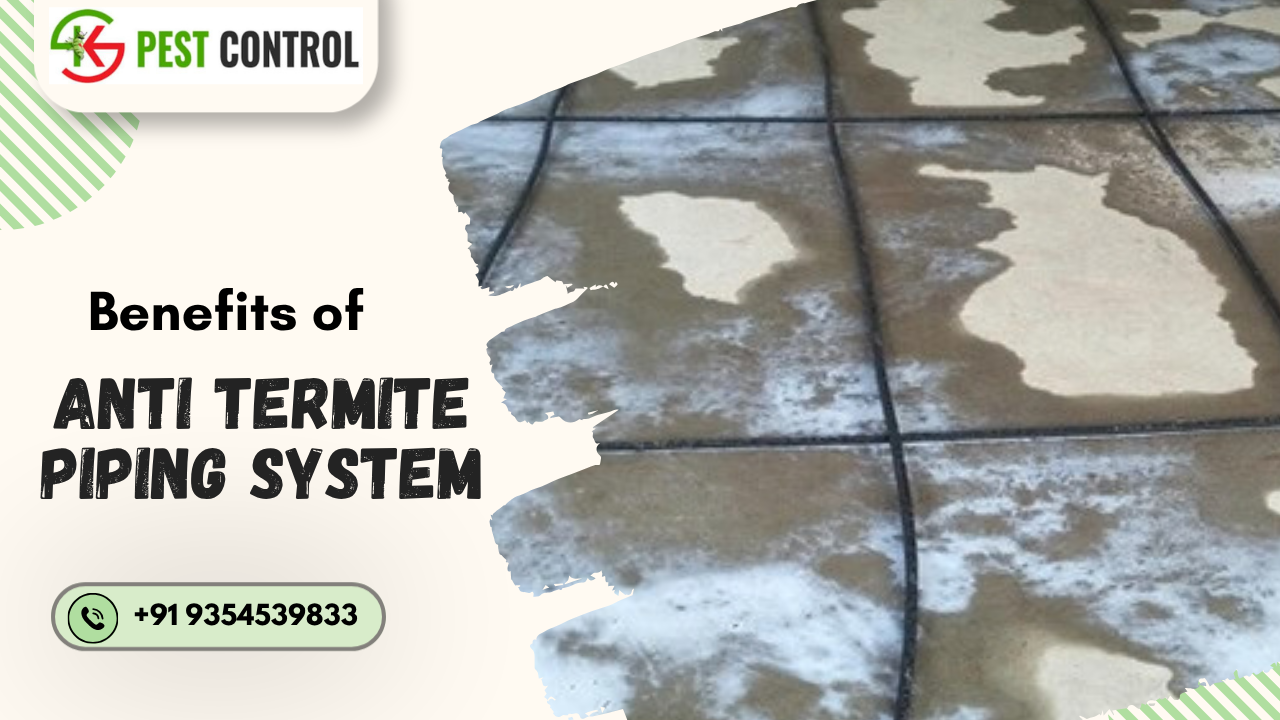
A termite piping system in Noida offers protection that traditional treatments simply can’t match. It creates a continuous, gap-free chemical barrier under your foundation, so termites have no weak point to exploit. It also leaves zero damage to your flooring, since the entire network stays underground — no drilling, no visible patches on marble or wood. Recharging the system is fast and non-intrusive, done entirely from an exterior junction box, so you don’t need to move furniture, empty cabinets, or even be home. Because the chemical never enters your living space, there’s no indoor odor or health risk to your family or pets. And with high-quality LLDPE pipes lasting 40–50 years, the system essentially matches the lifespan of the building itself — making it a one-time structural investment rather than a recurring expense.
5 Key Benefits of a Termite Piping System in Noida
1. Zero Damage to Your Flooring
Unlike traditional drilling, the entire pipe network sits underground before your floor is even poured. There are no holes drilled into your marble, wood, or tiles, and no visible patches to repair later. Your interiors stay completely untouched, no matter how many times the system is recharged. This makes it the only termite treatment that protects premium flooring investments long-term.
2. Continuous, Gap-Free Protection
The pipes release termiticide through emitters spaced every 30cm, creating a uniform chemical barrier around the entire foundation. Traditional drill-and-fill methods leave uneven “pools” of chemical with gaps in between — spots termites eventually find and exploit. A piping system removes those weak points entirely. This uniform coverage is why it’s considered far more reliable over time.
3. Zero Disruption to Daily Life
Recharging the system takes place entirely from the exterior junction box, so technicians never need to enter your home. There’s no moving furniture, no drilling noise, and no chemical smell indoors. You don’t even need to be present during a recharge. For families and businesses that can’t afford downtime, this is a major practical advantage.
4. Safer for Family, Pets, and the Environment
Because the termiticide is injected underground and sealed beneath a concrete slab, there’s no airborne exposure inside the house. This eliminates the health risks associated with indoor pesticide spraying, especially for young children and pets. It also reduces overall pesticide use compared to repeated surface treatments. This is why the system is increasingly recommended for environmentally responsible construction.
5. Long-Term Cost Savings
The upfront installation cost is offset almost entirely by what it saves you later — no repeated drilling, no floor repolishing, and no replacing termite-damaged wood or furniture. High-quality LLDPE pipes last 40–50 years, roughly matching the lifespan of the building itself. Over time, the only recurring cost is a chemical recharge every 3–5 years. It functions less like a pest control expense and more like a one-time insurance policy for your property.
Siya Killer Pest Control Pvt. Ltd. : Your Trusted Partner in Noida
Executing a flawless pipe reticulation system requires a deep understanding of structural engineering, soil dynamics, and advanced pest management. A poorly installed system with cheap, easily crushed pipes or leaking joints is worse than having no system at all, as it provides a false sense of security.
For property owners and builders in Noida, partnering with an experienced, highly professional agency is non-negotiable.
At Siya Killer Pest Control Pvt. Ltd., we bring unparalleled expertise to every construction site across the Delhi NCR. Operating extensively from our corporate hubs in Shahpur Jat and Hauz Khas, we have dedicated technical teams that service Noida, Greater Noida, and the Yamuna Expressway regions daily.
We utilize only premium-grade, crush-resistant LLDPE porous piping materials and the safest, most effective WHO-approved chemicals on the market. We understand that your property is a massive financial and emotional investment. By seamlessly integrating our engineered termite piping systems during your construction phase, we ensure that your luxury interiors remain completely safe from the devastating threat of white ants for decades to come. Our commitment to transparent pricing, punctual service, and long-term warranties makes us the preferred choice for top architects, builders, and discerning homeowners.
Frequently Asked Questions (FAQs) About Termite Piping Systems
To ensure you have absolute clarity before making this crucial construction decision, we have compiled the most comprehensive list of frequently asked questions regarding termite piping systems in Noida.
1. At what exact stage of construction should the termite piping system be installed? The piping network must be installed immediately after the soil is compacted and leveled within the plinth, right before the soling (brickbat) or the final concrete ground slab is poured. It is crucial to coordinate with your builder to call in the pest control team at this exact juncture.
2. How long does the underground pipe material last? High-quality Linear Low-Density Polyethylene (LLDPE) pipes are incredibly durable and highly resistant to soil acidity and moisture. When installed correctly without exposure to direct sunlight, these pipes can easily last for 40 to 50 years, effectively matching the structural lifespan of the building itself.
3. Will the pressure of the concrete floor crush the porous pipes? No. Premium reticulation pipes are specifically engineered with high wall thickness to withstand the heavy compressive load of wet concrete and the permanent weight of the cured floor slab. However, it is vital that the soil bed is cleared of sharp stones before installation to prevent pinpoint punctures.
4. How frequently do I need to refill or recharge the chemicals in the system? The longevity of the chemical barrier depends on the specific termiticide used and the moisture levels in the soil. Typically, a high-quality non-repellent chemical barrier will remain effective for 3 to 5 years. We recommend a scheduled chemical recharge every 3 to 4 years to maintain unbroken protection.
5. Can a termite piping system be installed in an already constructed, older house in Noida? Generally, this system is designed for pre-construction or major renovation phases where the flooring is being completely replaced. If you have an existing, finished house, you cannot install a sub-floor piping system without tearing up the floors. However, a perimeter piping system can sometimes be installed in the garden or soil trench running alongside the exterior walls of an existing bungalow.
6. Is the chemical used in the piping system dangerous for my family or pets? When installed and operated correctly, the termite piping system is the safest pest control method available. Because the chemical is pumped into external junction boxes and distributed deep underground beneath a concrete slab, there is absolutely zero airborne chemical exposure, odor, or contact risk for the inhabitants of the house.
7. Does the system require any electricity or regular maintenance to function? The system itself requires no electricity, moving parts, or daily maintenance. It is a passive delivery network. The only “maintenance” required is the chemical injection every few years, which is powered by the external pump brought in by the pest control technician.
8. What happens if dirt or mud blocks the emitter holes in the underground pipes? Premium reticulation pipes are designed with specialized one-way drip slits or pressure-compensating emitters that open only when pressurized from the inside and snap shut when the pressure drops. This intelligent design prevents soil, sand, or roots from entering and clogging the pipe network.
9. How do you ensure the chemical reaches all parts of a large house? This is where hydraulic engineering comes into play. The pipe network is divided into multiple manageable zones, each connected to its own inlet valve in the junction box. By pressurizing one zone at a time using industrial pumps, we ensure the chemical reaches the very end of the network with consistent volume, providing uniform coverage beneath the entire slab.
10. Is a termite piping system expensive compared to traditional drill treatments? The initial material and labor cost during construction is slightly higher than a basic liquid spray treatment. However, when you factor in the cost of future drilling treatments, the cosmetic damage to your flooring, and the potential loss of expensive wooden interiors, the piping system is vastly more economical over the lifespan of the property.
11. Can termites eat through the plastic pipes? No. Termites are exclusively attracted to cellulose materials (wood, paper, cardboard). They have absolutely no biological interest in consuming LLDPE or PVC plastics.
12. Does a termite piping system guarantee 100% protection? While no system can offer a literal “magic” guarantee against nature, a professionally designed and regularly recharged piping system using premium chemicals offers the highest possible level of defense (upwards of 99% efficacy) available in modern structural pest management.
13. Do I need to be present at home when the system is recharged? One of the greatest conveniences of the system is that you do not need to be indoors. Because the junction boxes are located on the exterior of the property, our technicians can connect their pumps, recharge the system, and secure the boxes without ever needing to enter your home or disrupt your daily schedule.
14. Are termite piping systems approved by building authorities? Yes. Modern reticulation systems comply with international building codes and are highly recommended by the Indian Green Building Council (IGBC) as an environmentally responsible, long-term approach to structural pest management, as it reduces the frequent indoor use of pesticide sprays.
15. How can I book an installation for my construction site in Noida? Booking is incredibly simple. If your property is currently under construction or in the planning phase, contact our teams at Shahpur Jat or Hauz Khas. We will schedule a free site inspection with your architect or civil contractor, assess the blueprint, and provide a customized layout and quotation for your specific property.
Conclusion: Protect Your Property for Life
Don’t let termites silently destroy the investment you’ve worked so hard to build. A termite piping system in Noida isn’t just a pest control add-on — it’s a permanent, damage-free, and future-proof shield for your home or commercial property. From flawless flooring protection to decades of worry-free peace of mind, this is the smartest, most reliable way to safeguard your space against Noida’s relentless termite threat.
Don’t wait for the warning signs to show up — by then, the damage is already done. Take the proactive step today and secure your property with a termite piping system built to last a lifetime.
👉 Explore our related services: Reticulation Method – Piping System | Pre-Anti Termite Treatment | Post-Anti Termite Treatment
Ready to protect your property? Contact Siya Killer Pest Control today for a free site inspection and expert consultation. Stop searching for “termite piping treatment in noida” and Call us now at 9354539833 and let our specialists design a customized termite piping solution for your Noida property — before it’s too late.